
PhysioVaping VR
Designing VR software for scientific study
Published Study Protocol
VR Interaction Design + Engineering
Health Research


Team
Dr. Shu Wei
XR Pediatrics Researchers
Timeline
May 2025 - Jan 2026 [Dev]
Feb 2026 - Present [Study]
Roles
VR Design Engineer
Context
Every decision was judged against one bar: would this affect the data.
Over the course of half a year, I designed and developed a VR research tool alongside Dr. Shu Wei at XR Pediatrics, a Yale School of Medicine lab, measuring if we can track nicotine craving in young adults through eye-tracking and biometrics with nicotine-related cues (eg. visuals, sounds, dialogue, 3D characters) in VR. I built the core experience over six months, and have supported the study since.
We tracked
3 biometrics
heart rate | eye gaze | skin conductance
So far:
20+
participants, and research is ongoing
This protocol has been
Published
in the Journal of Medical Internet Research

Problem Statement
Can physiological response inside a controlled VR environment surface an early signal of nicotine-use risk that self-report can't reliably provide?
The Challenge
Find out whether biometric response in VR can catch what self-report misses for nicotine craving.
Traditional assessments of nicotine craving and addiction risk lean on self-report, which is biased and blind to real-time cognitive and emotional response.
PhysioVaping VR tests whether eye gaze, heart rate, and skin conductance captured during VR cue exposure can reliably differentiate young adults who vape from those who don't, a non-invasive, harder-to-fake way to screen for nicotine-use risk in youth.
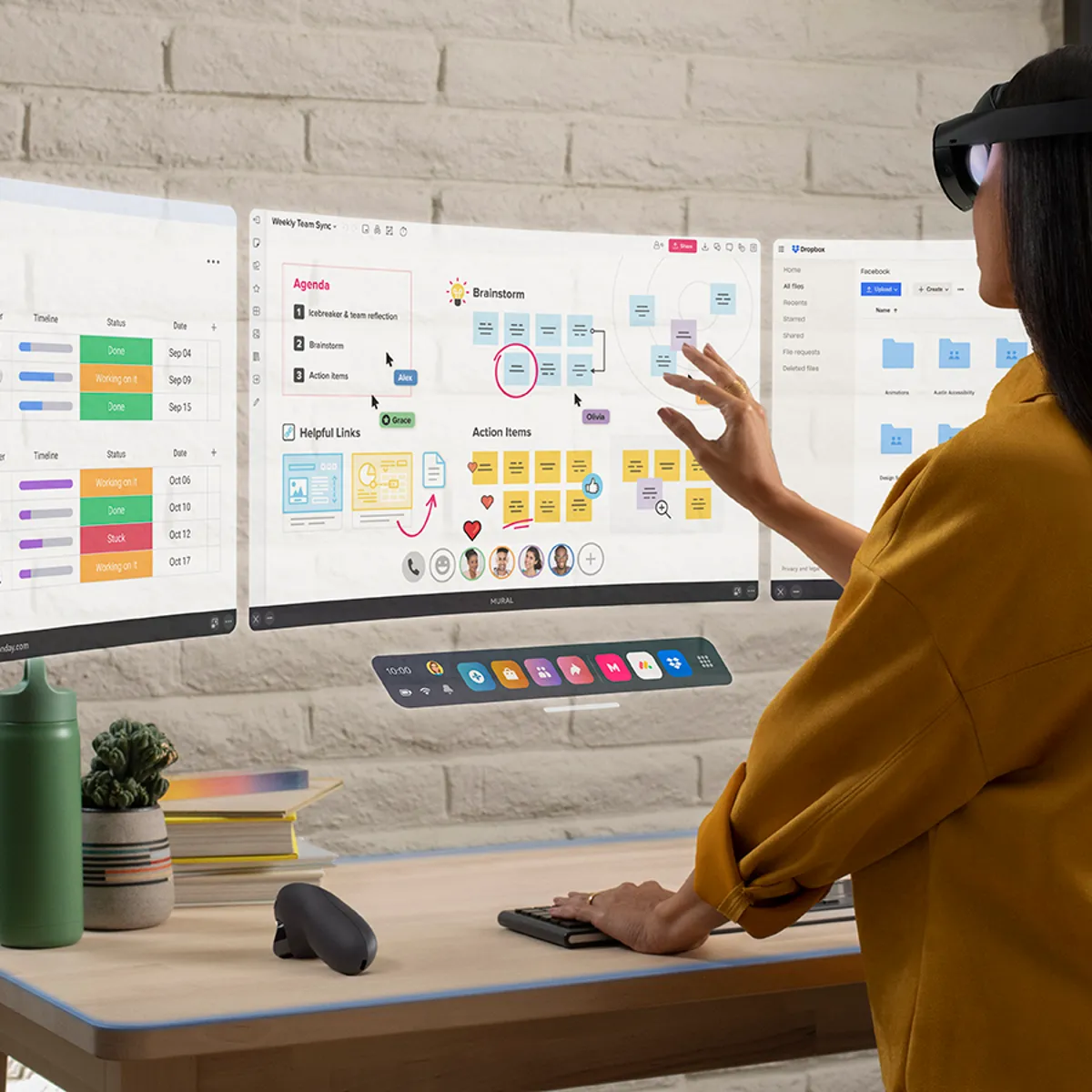
The Tension
The study needed consistent, controllable conditions. Most participants had never worn a VR headset in their life.
I co-designed participant flow with Dr. Wei around the fixed research progression, while still letting people explore freely with 3D characters within each VR environment, switching between one social and one non-social scene, each built to draw eye gaze without forcing it.
What the study needed
Consistent, controllable conditions for heart rate + eye gaze tracking
Clean biometric data, repeatable across every participant.
What the participant needed
A space that felt natural, not clinical, as most had never worn a headset before.
Baseline biometric measurement in neutral scene

Cue exposure in stimuli scenes w/ biometrics tracking
Participant reflection and feedback
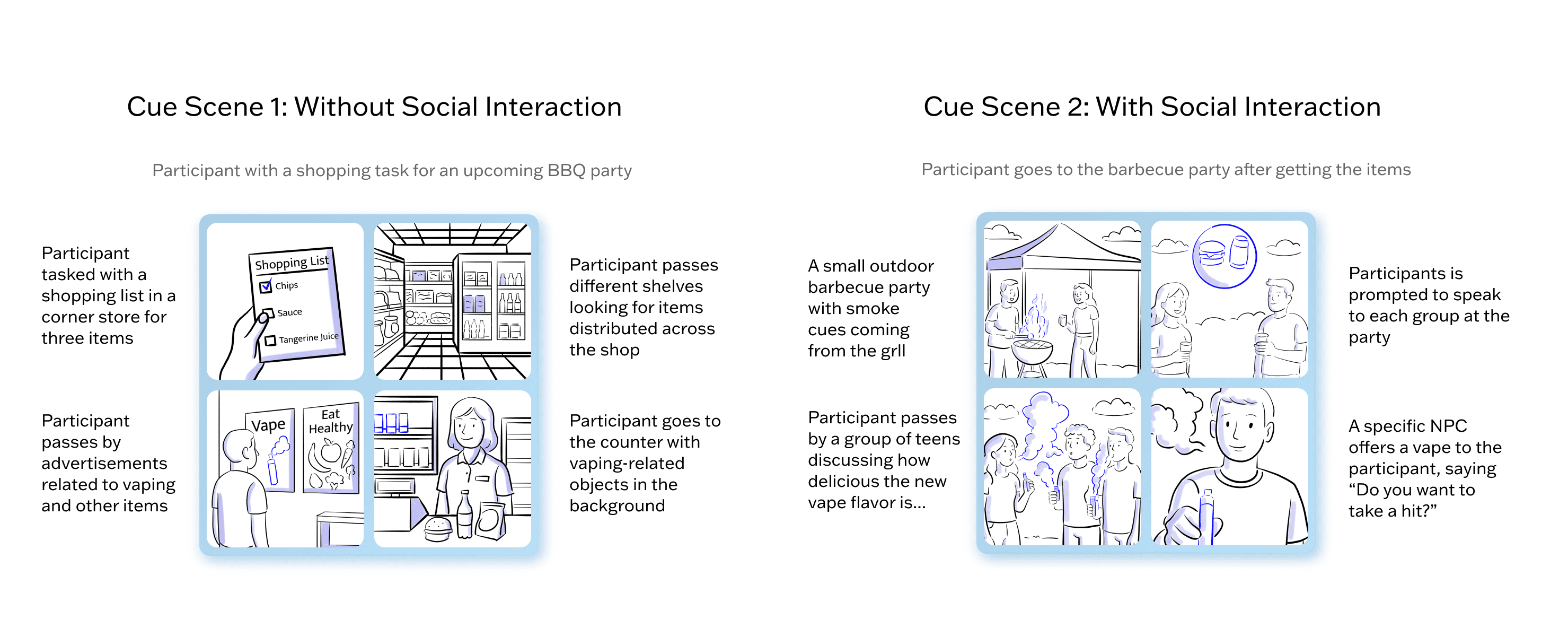
Study Storyboard: 2 scenes with stimuli to measure cravings through biometrics
Key Decisions
Two calls where the obvious interface wasn't the right one.
Decision
Hand-tracking menu, not a persistent UI
Reasoning
Immersion. The Quest Pro's built-in hand tracking meant objectives could surface through a palm rotation instead of a UI layer floating over the scene, leaning on what the headset already does well, instead of importing a flat-screen menu pattern into VR.
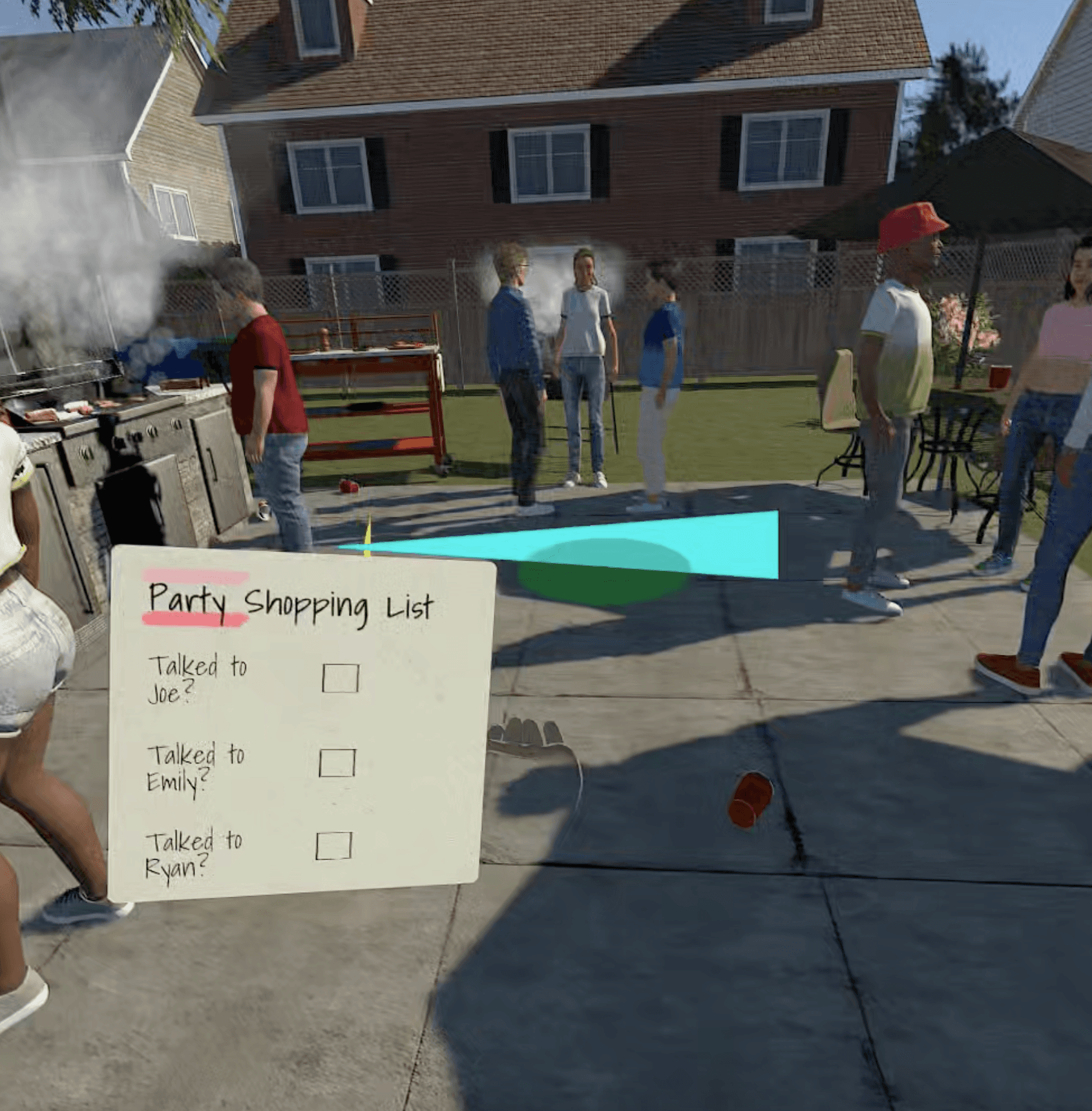
Hand motion based interface
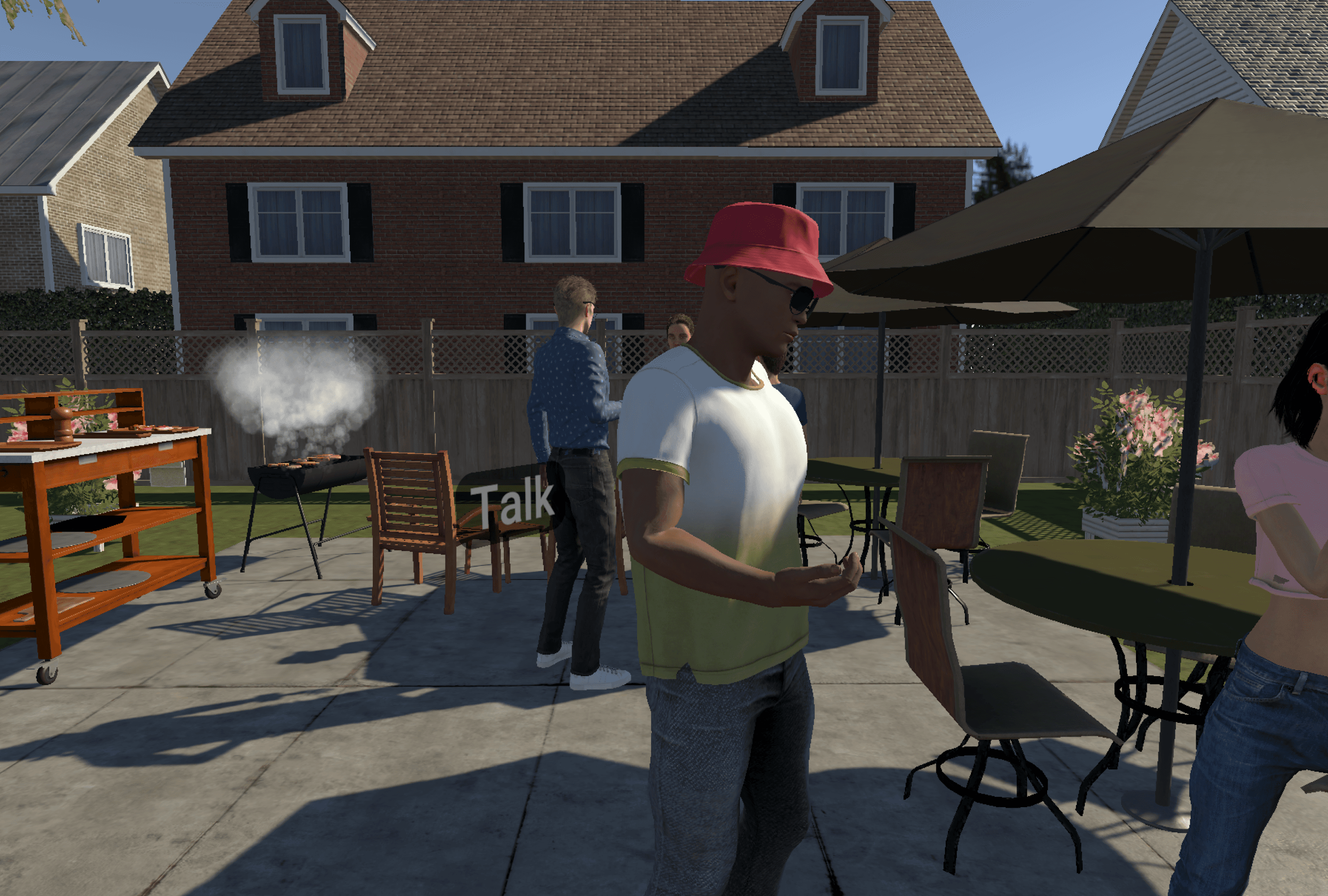
Talk Button [Old]
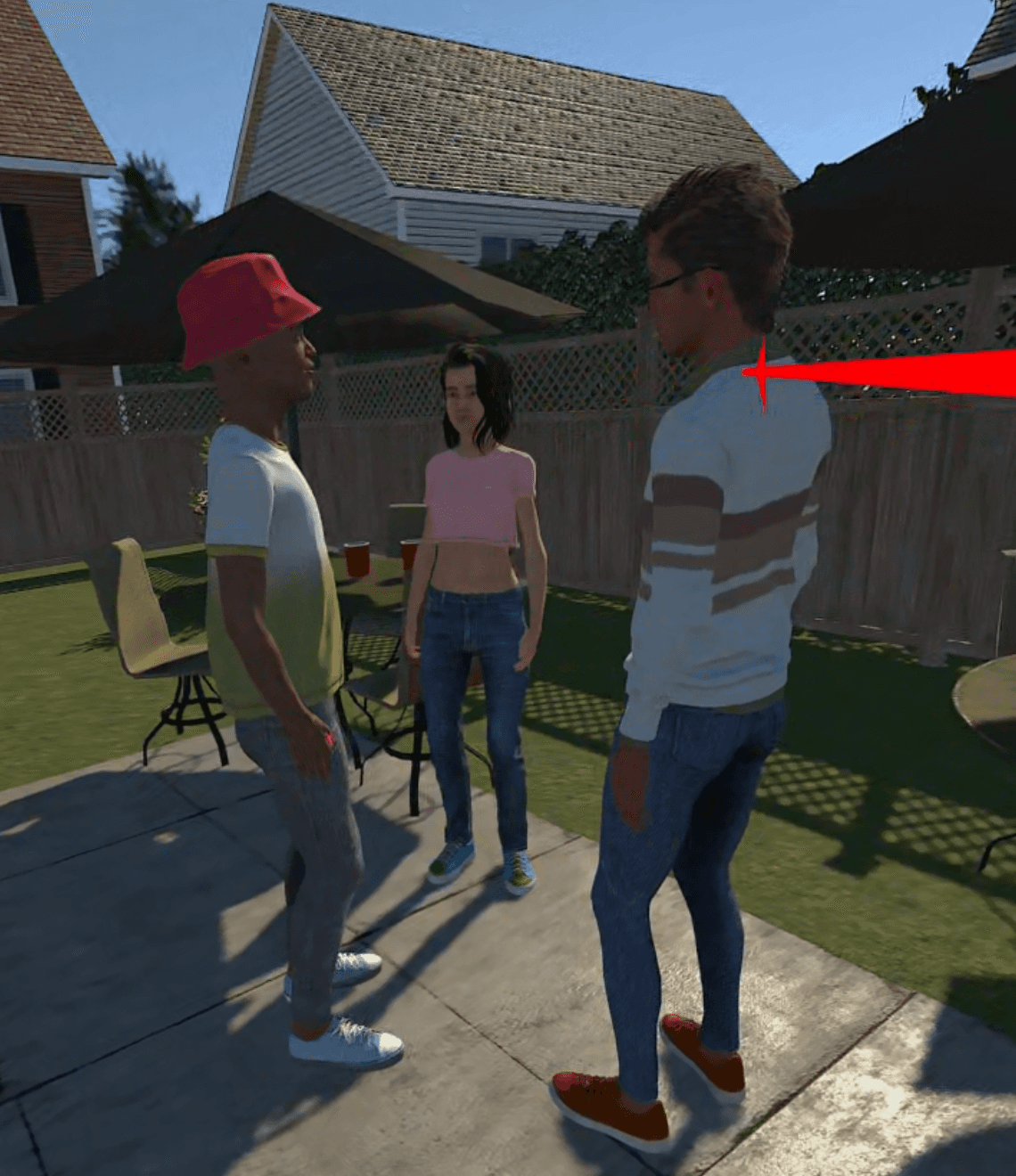
Proximity-Based Dialogue
Decision
Ambient proximity dialogue, not a "Talk" button
Reasoning
Working with 8 members of a youth advisory board and the XR Pediatrics researchers, we flagged a "Talk" button as too invasive. An input that reads as "pressing a button" works against immersion and the peer pressure we're measuring. I redesigned around proximity: get close enough, and the conversation starts on its own.
Craft in Execution
Translating a research protocol into a working Unity build, turning interaction design into code with immersion.
After designing the VR experience and interactions, I built in Unity and C#, along with working on animations and character models in iClone8/Character Creator 4.
Co-Design & Iteration
Two focus groups changed the music, the script, and the way VR characters moved.
We worked directly with SMEs and two youth advisory board focus groups (8 members total) of the target age group to refine the experience for immersion, intuitiveness, and believability.
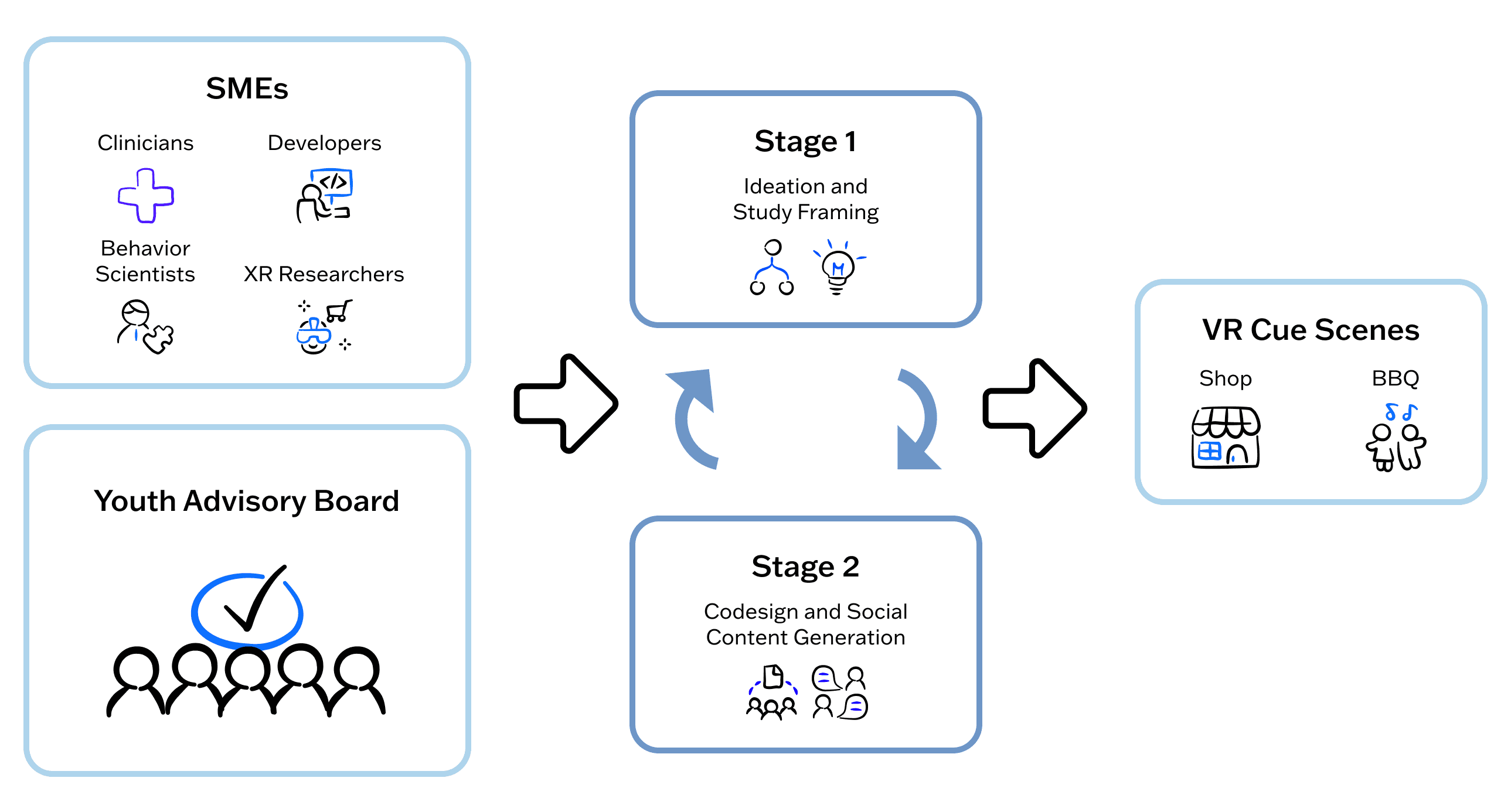
Co-Design Process Diagram
Before: No ambient music
After: Context-aware background music and SFX matched to social tone (eg. party music, ambient dialogue)
Script
Voice lines edited from original script (which sounded too formal and like adults) to match real slang and study aim.
Animation
Facial-timing and body movements tweaked in iClone8 for peer believability, with lip syncing introduced.
Interaction Placement
Character groupings, convenience store items were repositioned to feel natural in the space and easier for participants to see.
Impact
Published in JMIR, with 20+ participants through the study so far.
The study is still ongoing. I continue to support XR Pediatrics on recruitment, participant interviews, and running the VR experience technically, and early findings are planned for submission to CHI 2027.


Reflection
What I'd carry into the next project.
On designing for a user who's never done this before
Most participants had never worn a VR headset. I learned to stop assuming any baseline familiarity and design every onboarding moment as someone's very first minute inside a headset — because for most of them, it was.
On the gap between the design review and the headset
No amount of reviewing flowcharts caught what showed up the moment I put the headset on. Iterating in the headset itself became the actual design process, not a QA step tacked onto the end of it.


